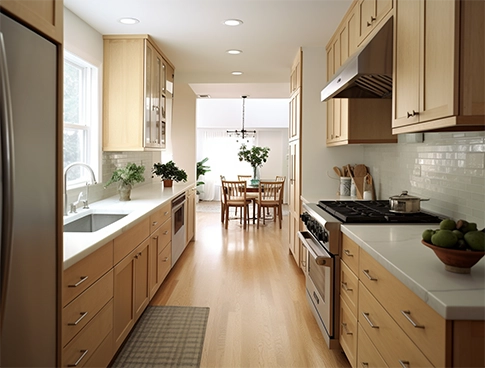
We’ve all been there: balancing a scorching pan while desperately searching for a clear square inch of counter space. For years, popular kitchens felt more like pristine museums than functional hubs, prioritizing an all-white aesthetic over everyday livability. Industry data reveals that homeowners are increasingly exhausted by these visual “show” spaces that increase cleaning time rather than reduce it.
Human-centric design is finally changing this frustrating narrative. This refreshing shift prioritizes warm, organic materials that naturally hide daily wear. Today’s most requested kitchen renovation styles prove that smarter layouts, durable surfaces, and intuitive technology work together to make your daily routine truly effortless.
Why Quartz and Porcelain are Replacing High-Maintenance Granite
For years, homeowners accepted that luxury contemporary kitchen designs required a compromise: stunning natural stone countertops paired with the exhausting chore of annual sealing. Natural materials like granite act like hard sponges. This “porosity” means everyday spills can easily seep in, causing permanent stains and creating a hidden breeding ground for bacteria.
Today’s modern kitchen designs solve this frustration through engineered stone, which is manufactured to be completely non-porous. The standout benefit of quartz and porcelain countertop durability is that neither requires chemical sealing. Messes sit safely on the surface waiting for a quick wipe, saving you significant maintenance costs while keeping your food prep zones incredibly hygienic.
While quartz rules everyday use, porcelain shines in heat-heavy zones because you can set a boiling pot directly on it without damage. With these worry-free foundations secured, the focus naturally shifts toward color and atmosphere.
Beyond the All-White Kitchen: Using Earth Tones for a Calm Home
The clinical, all-white contemporary style kitchen is stepping aside for something warmer. While stark white spaces often feel cavernous, earth tones instantly make large rooms cozy. This modern style kitchen design shift creates a relaxing, everyday retreat.
This shift embraces Biophilic kitchen design principles—a concept where connecting your indoor space to nature naturally reduces daily stress. This organic connection is exactly why natural wood cabinets are making a massive comeback. For fresh kitchen suggestions, consider this Popular 2026 Color Palette:
Warm neutrals: cashmere, greige, creamy white, soft taupe, and light brown.
Greens: sage, olive, moss, and earthy green are among the strongest choices.
Blues: navy, cobalt, robin’s egg, and smoky blue-gray are popular accents or cabinet colors.
Browns and clays: chocolate, mahogany, clay, and terracotta-like tones are gaining ground for a warmer, more grounded look.
Bringing these grounding colors indoors creates a calm atmosphere, making weeknight meal prep feel effortless. Complementing this relaxing aesthetic with upgraded functionality is the next critical step.
Why Your Next Stove Should Use Magnets, Not Flames
Moving beyond slow electric coils and messy gas grates, induction cooking uses magnetic fields to heat the pot directly. This clever method boils water in half the time while offering absolute precision over your simmering temperatures.
Family safety is another massive benefit of this technological shift. Since the surface only heats magnetic cookware, the glass stovetop stays cool to the touch—a lifesaver for homes with curious children. Furthermore, integrating smart appliances into cabinetry allows you to easily monitor meals or preheat your oven via smartphone while still unloading groceries.
These practical modern kitchen ideas are all about removing daily friction. Pairing your induction setup with a touchless faucet keeps meal prep seamless even when your hands are full. Optimizing your layout further maximizes efficiency, particularly through multi-functional islands and hidden pantries.
Maximizing Every Inch with Multi-Functional Islands and Hidden Pantries
Cluttered counters are a universal frustration, but today’s multifunctional island workstation features solve this by acting as powered control centers. Behind these islands, storage is also evolving. The key difference between a Butler’s pantry and a traditional walk-in larder is action. While traditional larders merely store boxes, a Butler’s pantry provides hidden, plug-ready countertops that keep coffee makers and messy prep work completely out of sight.
Efficiency also improves at the tap, particularly when optimizing storage for small layouts. Upgrading from a standard to a workstation kitchen sink reveals a brilliant functional shift. Workstation sinks feature interior ledges that allow tools to slide directly over the water, instantly doubling your usable prep area. Essential workstation sink accessories include:
Integrated cutting boards
Custom-fit colanders
Roll-up drying racks
The WorkStation Kitchen Sink
The best modern designs pair these clever layouts with sustainable choices that lower energy bills and reduce your carbon footprint.
Sustainable Choices That Lower Your Energy Bills and Carbon Footprint
Building a greener home starts with mindful choices. Sustainable material sourcing is key for eco-friendly kitchen cabinets. Consider bamboo over traditional hardwoods. Because it regrows rapidly, bamboo is highly renewable while offering the scratch-resistant durability needed for active family life.
True sustainability in modern kitchen renovations also protects your indoor air. Standard cabinet glues and paints often release VOCs (Volatile Organic Compounds)—hidden chemicals that slowly evaporate into your living space. Choosing low-VOC finishes ensures your family breathes safely without sacrificing beautiful, long-lasting color.
Lowering utility bills is equally simple using touchless kitchen faucet technology. These smart fixtures quickly pay for themselves by automatically cutting water flow while you scrub dishes, preventing wasted gallons. A healthy, efficient foundation naturally pairs with thoughtful layered lighting and modern hardware.
Creating the Perfect Mood with Layered Lighting and Modern Hardware
Cooking in your own shadow is a daily frustration easily solved by the “Three-Layer Rule.” A well-designed room requires both under-cabinet and ambient lighting layers. Ambient light provides broad, room-filling illumination, while task lighting acts as a focused, bright beam directly on your countertops for safe meal prep.
The third layer adds the design magic. Accent lighting highlights architectural details, creating a high-end look easily achieved on a tight budget by hiding affordable LED strips above your contemporary kitchen cupboards.
Complete this inviting atmosphere with modern hardware, which acts as the jewelry of your space. Matte finishes effortlessly hide messy daily fingerprints, offering a practical alternative to brushed gold hardware.
Your 3-Step Action Plan for a Timeless Kitchen Renovation
You no longer need to view kitchen design ideas as just pristine Instagram photos; you are now an informed planner ready to take action. Remember, a trend is only successful if it makes your Tuesday night dinner easier. Start your project by conducting a “Kitchen Audit” of your current space using this approach:
The ‘Livability’ Checklist:
Evaluate current pain points.
Prioritize high-traffic zones.
Choose one ‘hero’ trend.
By following this checklist, you will seamlessly balance trendy kitchen renovation styles with timeless functionality, ultimately protecting your home’s resale value. Start confidently selecting new kitchen ideas that directly solve your family’s daily frustrations.